



Table of Contents
– What Is Mindfulness for Families?
– How to Introduce Mindfulness to Your Family
– Family Meditation and Activities for All Ages
– Creating a Mindful Environment at Home
What Is Mindfulness for Families?
Mindfulness for families is about embracing a shared journey toward greater awareness and connection. At its core, it’s about being present with each other without judgment. Imagine your family sitting around a cozy campfire, sharing stories. That campfire is mindfulness, providing warmth and light, bringing everyone closer together.
When families practice mindfulness, the benefits are vast. One significant impact is the improvement in communication. By reducing stress, mindfulness allows family members to listen more intently and respond with empathy. This practice can transform chaotic moments into opportunities for understanding. For children, learning mindfulness can enhance their attention span and reduce anxiety. This pays off in better academic performance and emotional health.
Mindfulness can also help build emotional resilience in families. It fosters skills to collectively face life’s challenges, creating a supportive atmosphere where everyone works together. Simple activities like mindful breathing or shared meditation can quickly integrate mindfulness into your family routine. Even the way you eat your meals can become more thoughtful. Mindful eating turns dinner time into a chance to appreciate food and one another, transforming an everyday activity into a moment of connection. Embracing mindfulness as a family could bring harmony and joy to your home.
How to Introduce Mindfulness to Your Family
Introducing mindfulness to your family can feel like planting seeds in a garden. Start small, with simple, age-appropriate activities that everyone can participate in. Begin by setting aside a few minutes each day for a mindful moment together, perhaps during breakfast or before bedtime. This helps create a routine where everyone can gather their thoughts and focus on being present.
One effective way to introduce mindfulness is through family meditation practices. Start with guided meditation for just a few minutes, using a quiet space free from distractions. Apps designed for family mindfulness can be helpful, providing structured programs tailored to all ages. Children, especially, enjoy mindfulness games designed to engage their curiosity and encourage playful learning.
Mindful parenting techniques also play a crucial role in setting an example. Demonstrate patience and active listening, showing your children that you value their emotions and perspectives. Encourage open discussions around what mindfulness means and how it benefits everyone. This can spark enthusiasm and acceptance of new practices.
You can incorporate mindfulness into daily routines with activities like mindful walking or gratitude practices during family meals. Celebrate small successes and be patient as your family adapts. Like a garden, mindfulness takes time to flourish. With consistency and care, it can become a nurturing space for growth and connection in your family.
Family Meditation and Activities for All Ages
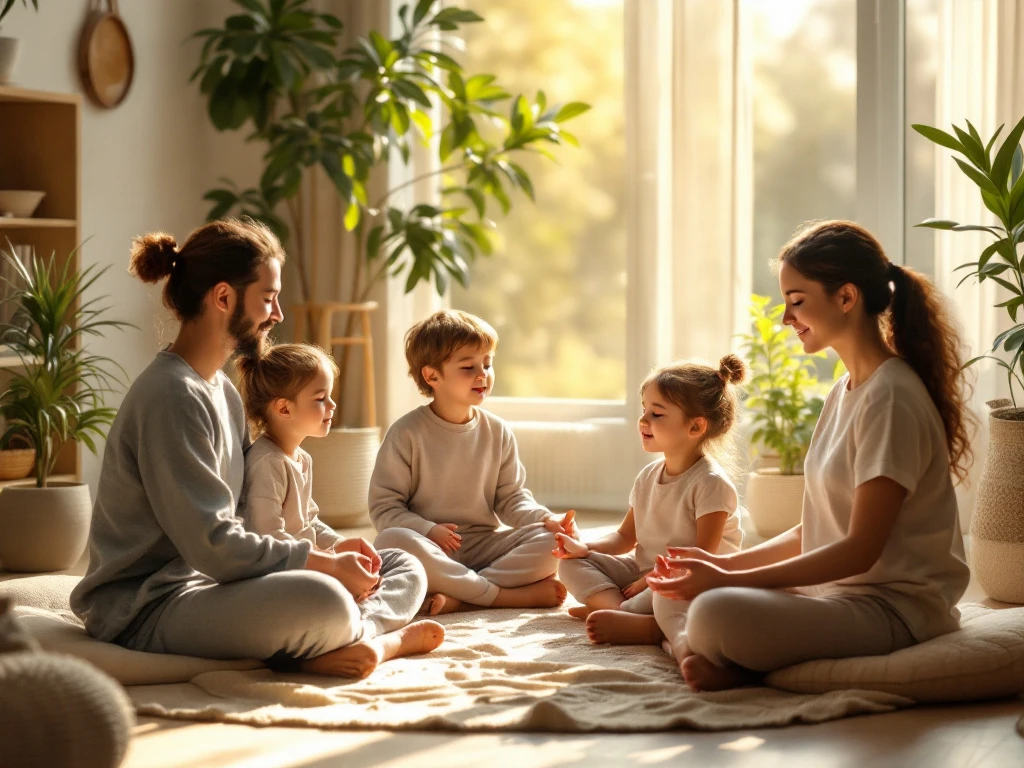
Family meditation and mindfulness activities can cater to every age, making it easy to engage everyone in the household. Starting with family meditation, find a comfortable space where you can all sit together. Use short, guided sessions that cater to families, allowing each member to settle into the practice without feeling overwhelmed.
To keep it fun, incorporate mindfulness games. These are perfect for kids and can turn regular playtime into mindful playtime. Games that involve mindful listening and focusing on specific sounds or objects can captivate children’s attention while teaching them to be present. For example, you can play a mindful treasure hunt, where everyone searches for objects that align with particular emotions or experiences.
Breathing exercises for kids offer not just a calming effect but also teach them how to manage their emotions. Practice simple breathing techniques, inhaling slowly and exhaling fully, imagining blowing up a big, colorful balloon. This visualization can be a fun and effective way for children to understand deep breathing.
Mindful family routines such as morning gratitude circles or evening reflections can help everyone wind down and connect. Each member shares something they appreciated about their day, fostering appreciation and empathy. By creatively embedding these activities into your routines, you make mindfulness a natural and enjoyable part of your family’s life.
Creating a Mindful Environment at Home
Crafting a mindful environment at home doesn’t require a complete overhaul; it’s about making small, intentional changes that promote calm and awareness. Start by designating a peaceful corner in your home as a mindfulness zone. This space doesn’t need to be large but should be free of clutter and distractions. Add comfortable seating, soft lighting, and perhaps some soothing elements like plants or a small water feature.
Incorporate elements of mindful living into your daily routines. For example, practice mindful eating by focusing on the taste, texture, and aroma of your food during family meals. Encourage everyone to eat slowly and express gratitude for their meal, which turns eating into an enriching, shared experience.
Encourage mindful communication as part of your family’s interactions. Teach and model active listening, where everyone takes turns speaking and listening without interruptions. This not only improves understanding but also strengthens family bonds by validating each person’s feelings and opinions.
Introduce mindful time management by organizing family activities with intention and presence in mind. Schedule regular tech-free times where the family can engage in activities like board games, nature walks, or storytelling, allowing everyone to unplug and focus on each other.
By consciously implementing these aspects into your home life, you create a serene and nurturing atmosphere that supports mindfulness and enhances family well-being.
Conclusion
Embracing mindfulness as a family can lead to profound transformations in both individual and collective well-being. By integrating simple practices into your daily routines, you can strengthen bonds, improve communication, and promote a calmer, more understanding household. Whether it’s through shared meditation, playful mindfulness activities, or mindful eating, these small steps can make a big difference over time. Remember that the journey toward mindfulness is ongoing and evolves with your family’s needs and experiences. Keep nurturing this practice, and you’ll likely discover new levels of connection and resilience along the way. Celebrate each mindful moment and watch as it cultivates a more harmonious and joyful family life.
FAQs
Q: How can I get my children interested in mindfulness?
A: Start by incorporating mindfulness into activities they already enjoy, like playtime or storytelling. Use games that involve mindful listening or breathing exercises to capture their interest naturally.
Q: What if a family member is resistant to mindfulness practices?
A: Introduce mindfulness gradually and focus on its benefits. Share how it can help reduce stress and improve communication, offering support without pressure. Sometimes, leading by example is the most effective way to inspire curiosity and willingness.
Q: How often should we practice mindfulness as a family?
A: Consistency is key, but it doesn’t have to be daily. Aim for short sessions a few times a week and gradually increase as everyone becomes more comfortable. Even brief moments of mindfulness can significantly impact your family’s overall well-being.
What is next?
Now that you’ve explored the benefits and methods of integrating mindfulness into your family life, it’s time to take action. Start by choosing one or two mindfulness activities that resonate with your family, and set a date to begin. It could be a mindful walk in the park, a shared guided meditation session, or starting a gratitude journal together. As you incorporate these practices, observe and discuss their impacts, adjusting as needed. Remember, the key is consistency and openness to growing together. If you’re ready to deepen your practice, consider participating in a family mindfulness workshop or retreat. Embrace each step and revel in the enhanced understanding and joy that mindfulness brings to your family’s journey.