
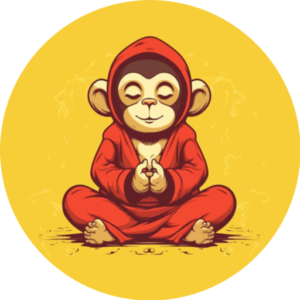


Here’s the myth we need to kill right now: meditation is not about having an empty head. So many people sit down, expecting silence, then panic when their brain won’t quiet down. They decide they’re “bad at it” and quit. Wrong measure entirely. A busy mind during meditation is not failure. It’s the whole point. You’re not trying to stop thoughts. You’re learning what to do when they show up, which they always will, even for people who’ve done this for decades.
The quick answer
You can’t stop thinking, and you’re not supposed to. Racing thoughts during meditation are normal. The skill is noticing you’ve drifted, then gently coming back to your breath. That “coming back” is the actual exercise. Do it a hundred times in ten minutes and you’ve meditated correctly.
Why your monkey mind isn’t a defect
We hear it constantly. “My brain won’t switch off, so meditation must not work for me.” Nope. That restless mind is just doing its job. Brains think, the way hearts beat. If you sat down and felt instantly calm, you wouldn’t need to practice at all.
The mental chatter you notice is a good sign. It means you’re paying attention. Most of us live all day inside that noise without ever hearing it.
What to actually do with racing thoughts
Here’s the part nobody tells you clearly. When you catch yourself planning dinner or replaying an awkward conversation, you don’t wrestle the thought away. You notice it, label it “thinking,” and return to the breath. No frustration. No score-keeping.
For overthinkers especially, we like giving the mind a small job. Count breaths one through ten, then start over. Or feel the air at the tip of your nose. When you’re anchored to a physical sensation, the racing thoughts have less room to run wild.
Some folks do better with sound. A guided meditation for racing thoughts gives your attention something to hold, which helps if silence makes you spiral. Others prefer counting. There’s no correct choice. Here’s a rough tradeoff we walk clients through:
| Guided audio | Silent breath focus |
| Easier when anxious or distracted | Builds deeper self-reliance over time |
| Can become a crutch | Harder to focus at first |
| Great for beginners with a busy mind | Better once the basics click |
Try both for a week. See which one leaves you calmer. That’s the only test that matters.
Common questions we get
Why can’t I stop thinking during meditation? Because your brain isn’t broken, it’s healthy. Thinking is what minds do. Meditation trains you to notice thoughts and let them pass, not to shut them off. Drop the goal of a blank mind and the whole thing gets easier.
Why can’t I clear my mind when I meditate? You can’t, and neither can we, and neither can longtime monks. A “clear mind” is a marketing fantasy. The real practice is returning your attention gently, again and again, no matter how much mental chatter shows up.
Is it normal to have thoughts during meditation? Completely normal. Everyone has them, every session. The thoughts aren’t the problem. Getting annoyed at the thoughts is what makes people quit. Expect the chatter, welcome it even, and just keep coming back.
How to stop overthinking during meditation
Short version. Stop trying so hard. Overthinkers tend to attack meditation like a task to master, and that tension feeds the very restlessness they’re fighting. Let it be a little sloppy.
When you drift, and you will, just smile at it. Come back. That soft return, done kindly, is meditation for busy minds in a nutshell.
Key takeaways
- A busy mind during meditation is normal, not a sign you’re bad at it.
- The goal isn’t zero thoughts. It’s noticing and returning.
- Anchors like breath counting help calm mental chatter.
- Guided audio suits anxious beginners, silence builds long-term focus.
- Stop fighting the monkey mind and it settles faster.
Conclusion
If you’ve been convinced your brain is too loud for this, we promise it isn’t. You’ve just been measuring the wrong thing. Every time your restless mind wanders and you bring it back, that’s a rep. Do enough reps and the noise really does soften.
What’s next
Try this today. Sit for five minutes, count ten breaths, and every time you drift, come back without judging yourself. That’s it. Want a hand building a practice that fits your particular kind of overthinking? Reach out to us. We’d genuinely love to help you sit with a calmer mind.